



Quick Summary
Most bathroom storage problems are not solved by another shelf. They are solved by putting the right kind of storage in the right place, then fixing it to something that will actually hold it.
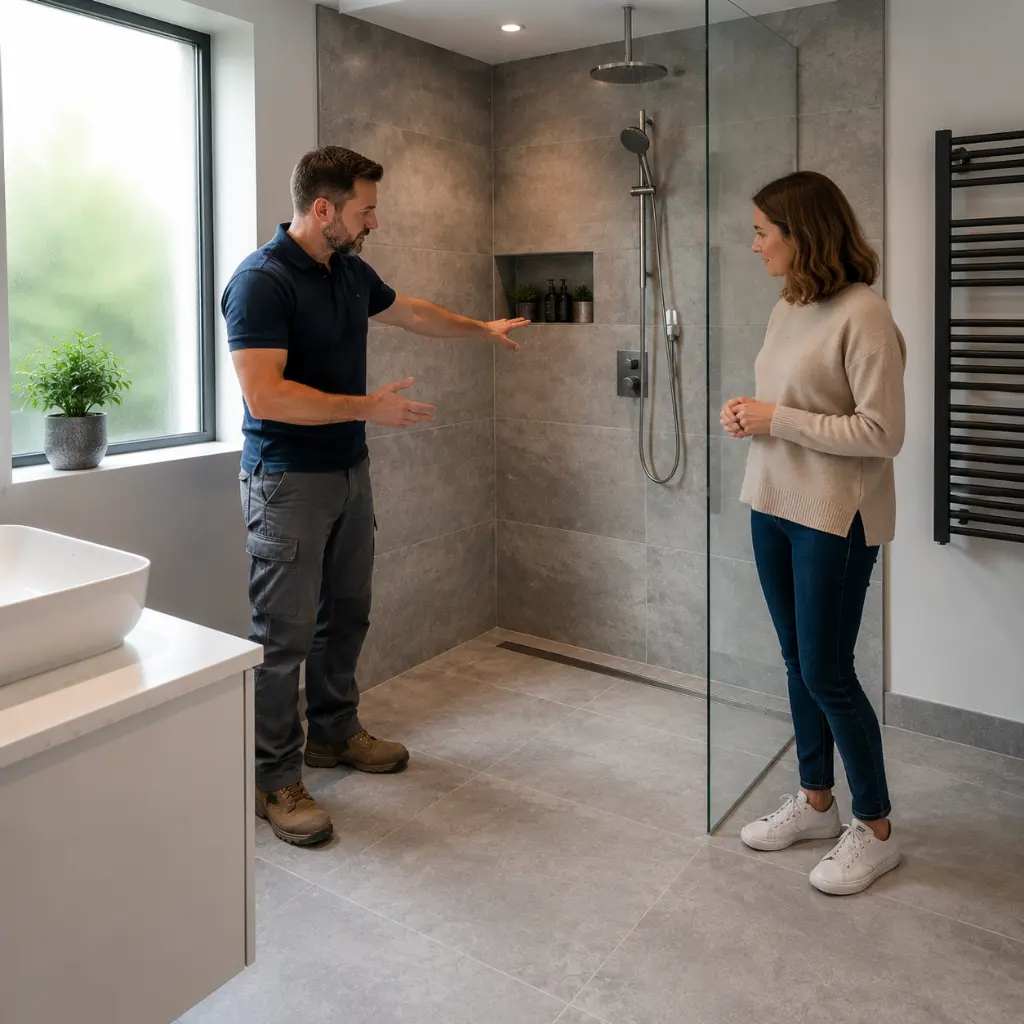
This guide covers the practical side of bathroom shelves and storage, from what holds a shelf on a tiled or stud wall to how deep it should be and where it belongs. It also looks at recessed niches, materials that cope with steam, and how to keep the space tidy once everything is fitted. If the installation needs professional attention, bathroom fitting in Harrow can help ensure shelves and other bathroom fixtures are securely fitted.
Work out what you are storing before you buy anything
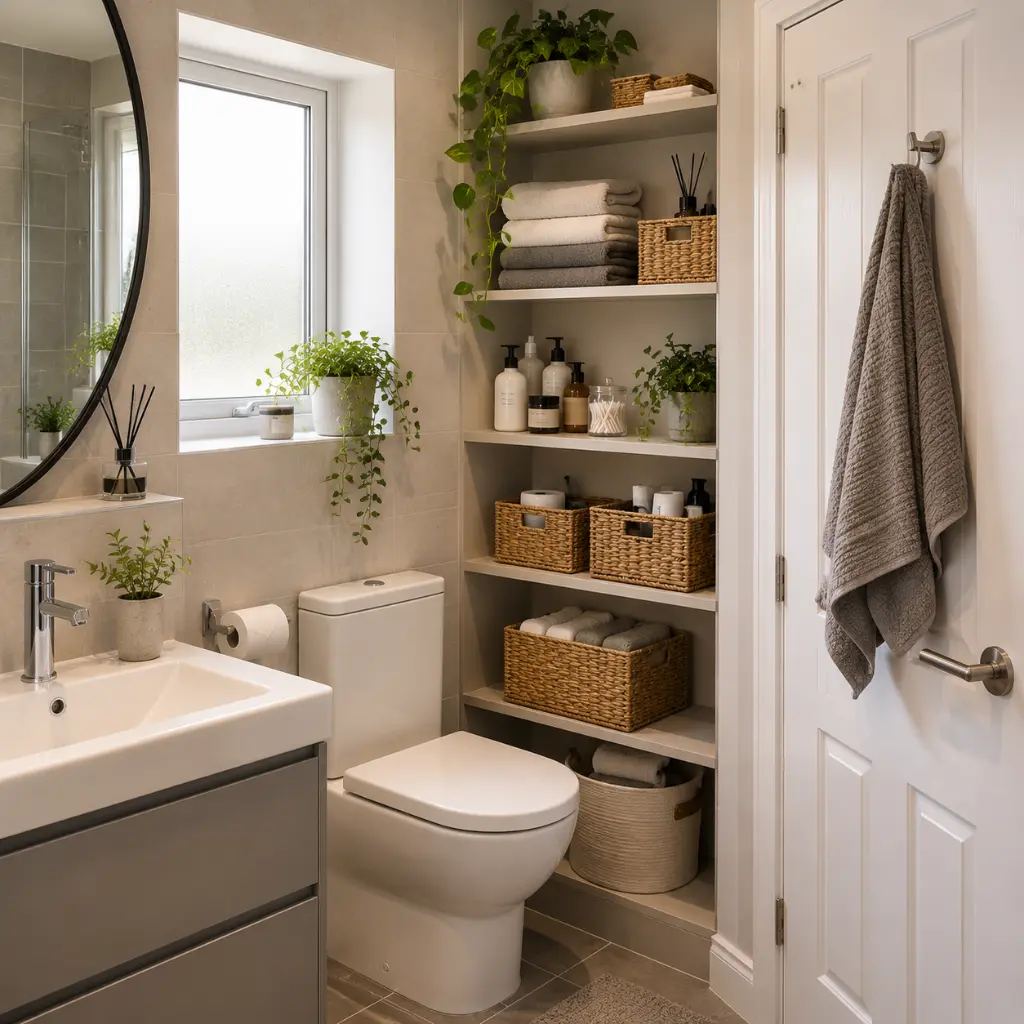
Everything in a bathroom falls into three groups. Daily items that need to be within arm’s reach, bulk items and refills that can sit high or low, and wet items such as flannels and razors that need air around them.
Measure the tallest bottle you own before setting shelf spacing. A gap of around 200mm suits most toiletries, and anything less will have you laying bottles on their side within a week.
The wall decides what the shelf can carry
This is where most shelves fail, and the answer changes completely depending on what is behind the tiles.
Solid masonry walls
Brick or block gives the strongest fixing, provided the screw reaches past the plaster and at least 40mm into the masonry itself. Plaster alone holds nothing, so a plug that stops short in the render layer will pull out with weight on it.
Stud partitions
Timber studs usually sit at 400mm or 600mm centres, and a fixing straight into a stud is worth more than any anchor. Where the shelf position does not line up, use a rated heavy-duty cavity fixing such as a metal expansion anchor or a spring toggle rather than a plastic plug.
Plastic plugs in plasterboard are the single most common cause of a sagging shelf. They spin in the hole and pull through the board face as soon as anything heavy goes on.
Dot-and-dab walls
Plasterboard bonded to blockwork leaves a void of 10mm to 25mm behind the board. A standard plug bridges that gap and crushes the board when tightened, so either use a long screw that lands properly in the block, or a fixing designed for dot-and-dab construction.
Drilling through tiles
Use a tile or diamond bit at slow speed with hammer action off, and masking tape to stop the bit skating across the glaze. Drill through the tile face rather than the grout line, since grout gives a weaker seat and can crack outwards.
Check for pipes and cables first with a detector, particularly above and beside a basin where supply pipes and wiring often run. Stainless or A2 grade screws are worth it, because plated steel bleeds rust marks down a tiled wall over time.
Not every bathroom wall is tiled these days, and the fixing changes with the finish. Hollow panels and thin applied coatings need the fixing to reach the board or masonry behind them, so it is worth knowing what is under the surface before drilling. The same applies to any of the bathroom wall finishes used instead of tiles , which behave very differently under a shelf bracket.
Floating shelves deserve a mention here. The concealed rods act as a lever, so the load at the front edge is multiplied at the fixing, and they need solid backing rather than board alone.
Recessed niches and built-in storage
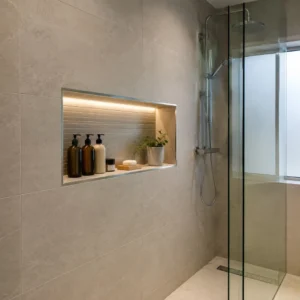
A niche is the tidiest form of storage in a small bathroom, because it takes nothing out of the floor area. It is far easier to form while a stud wall is open or a soil pipe is being boxed in than to cut into a finished wall later.
Depth is limited by the studs, so a 75mm or 100mm partition gives a shallow but usable recess once the backing board and tile thickness are taken off. Noggins go in above and below to carry the tile edges.
The base of a shower niche wants a slight fall towards the room so water runs out rather than sitting in the corner, and the whole recess is waterproofed before tiling.
Boxing around a concealed cistern gives a similar result with less work, as the top becomes a natural ledge, provided it is finished with a solid top rather than a tiled overhang.
Materials that cope with steam
Toughened glass shelves with polished edges are a sound choice near a basin, in 6mm or 8mm thickness with proper glass clips. They shrug off humidity entirely and disappear visually in a tight room.
Solid timber works well if every surface is sealed, including the underside and the ends, which are the faces people forget. Painted or veneered board is best kept away from the shower, since steam finds the edges and lifts the finish.
Check the brackets as carefully as the shelf. Powder-coated or stainless fittings hold up, while basic plated brackets tend to spot with rust where the coating is broken by a screwdriver.
A stone offcut from a worktop makes a durable ledge above a basin, though it is heavy enough to need fixing into something solid. Weight decides the fixing there, not appearance.
Height, depth and where things actually belong
Shelves above a basin need to clear the tap and any mirror or cabinet door swing, with enough space to get your hands under the spout comfortably. A depth of 120mm to 150mm holds toiletries without the shelf becoming a dumping ground.
Over-toilet storage should sit high enough to stand up under and set back from the front of the cistern. Anything projecting forward at head height will be caught sooner or later.
In a shower, position the niche or shelf at chest height and to the side of the shower head rather than directly beneath it. Under the spray it simply fills with water and everything on it stays wet.
Towels want air and distance from the spray, so open shelving suits them better than a closed cupboard where they never fully dry. In the Harrow homes TG Handyman London works in, the awkward corner beside the door is often the one spot with room for a tall unit, and fitted shelves there do more than three floating ones scattered around the walls. That kind of work sits with carpentry and fitted shelving in Harrow.
Keeping it organised once it is up
Group small items into trays or baskets so a whole shelf lifts off in one movement when it needs wiping. Loose bottles on an open shelf collect a film of condensation and dust that is tedious to clean around.
Decant refills out of cardboard packaging, which softens and marks shelves in a humid room. Keep the daily handful at eye level and push the spares to the high or low shelves.
Freestanding units and flat-pack cabinets earn their place, as long as they are anchored back to the wall and the feet stay clear of standing water.
Getting it right first time
Good bathroom shelves and storage come down to three decisions. What the wall can carry, how deep the shelf needs to be, and whether the position genuinely suits how the room is used each morning.
Answer those and the styling looks after itself. Skip them and you end up refilling screw holes in a tiled wall, which is a job nobody enjoys.
Fitted properly, first go
If you would rather not drill blind into a tiled wall, we are happy to look at the room and work out what it will take. TG Handyman London covers Harrow, Wealdstone, Pinner, Stanmore, Kenton and Edgware, fully insured and with no call-out fee. Request a free, no-obligation quote and we will give you a straight answer on what your walls will hold.