

Quick Summary
Most bathroom floors do not become dangerous because the wrong tile was chosen. They become dangerous because a film of soap and shampoo has built up on a surface that had no texture to begin with.
This guide explains how slip resistance is actually measured in the UK, what the R and barefoot ratings mean in a home bathroom, and why the highest rated tile is often the wrong choice. It also covers finishes, tile format, treating existing floors and the cleaning habits that decide how safe a floor stays. If you are updating a bathroom floor as part of a wider project, bathroom flooring work in Harrow can be considered alongside the right tile choice.
The ratings that matter on a UK datasheet
Tile suppliers quote several different systems, and they are not interchangeable. Knowing which one applies to your situation saves a lot of confusion in a showroom.
R ratings
The R scale comes from a ramp test carried out with oil and a person wearing boots, so it describes shod traction. It runs from R9 through to R13, with R10 or R11 the usual territory for a domestic bathroom floor.
R12 and R13 exist for commercial kitchens and industrial floors. In a house they are uncomfortable underfoot and difficult to keep clean.
Barefoot ratings
A separate ramp test done barefoot with soapy water produces classes A, B and C, and this is the one that actually reflects bathroom use. Class B suits shower floors and wet areas, while class A is aimed at dry barefoot zones such as a changing area.
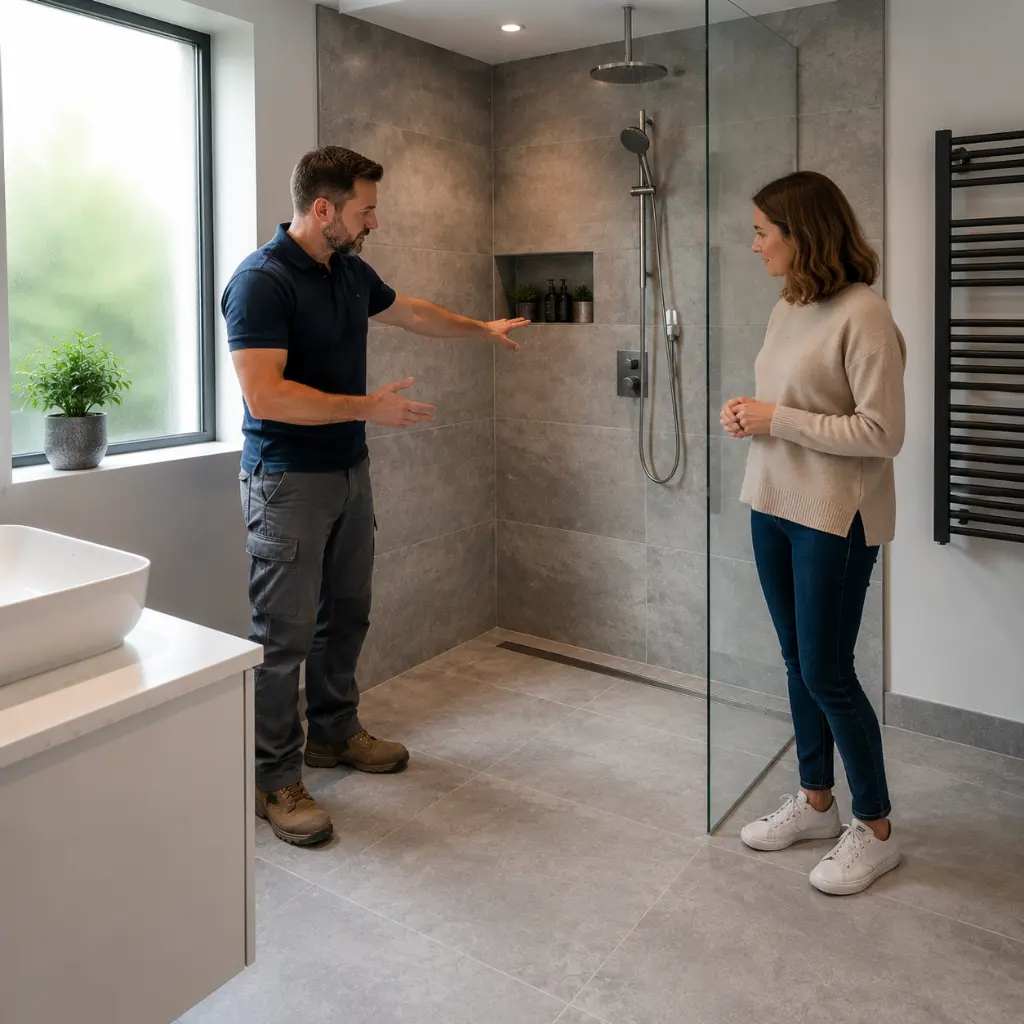
How much of your floor needs the class B tile is not a given. With a tray, the wet area stops at its edge, so the rest of the room can take a less textured tile. On a level floor the whole thing counts as wet, which is why the choice between a wet room and a walk-in shower is worth making before any tile is specified.
A tile can carry a decent R rating and no barefoot classification at all. If a supplier can only quote one figure, ask which test it came from.
Pendulum test values
UK slip assessments frequently use the pendulum test, quoted as a PTV. A wet reading of 36 or above is widely treated as low slip potential, and it is the measurement that carries most weight in this country when flooring is assessed after the fact.
Ignore DCOF figures you find on American tile sites. That is a different test with a different threshold, and it does not translate.
Why the highest rating is rarely the right one
Grip in a tile comes from texture, and texture holds onto whatever lands on it. A heavily profiled surface collects soap residue, body oils and limescale in every hollow.
Once those hollows fill, the floor loses much of the traction it was bought for. The tile is still rated the same, but the surface you are standing on is not the surface that was tested.
Comfort is the other consideration. Aggressive texture is unpleasant on bare feet and rough on knees when someone is bathing a child.
A micro-textured matt porcelain in the R10 to R11 range, kept clean, generally serves a family bathroom better than something far coarser that gets scrubbed twice a year.
Finish and format do as much work as the rating
Polished porcelain and polished marble are the two finishes to rule out for a bathroom floor. Both become genuinely hazardous underfoot when wet, however good they look dry.
A finish that is unsuitable for the floor can still be a good choice for the wall, since a vertical surface does not have to provide the same slip resistance. That is why a polished panel or sealed microcement can work well around a bath, while a smooth, polished finish underfoot may be unsuitable in a wet bathroom. It is worth keeping in mind if you are also weighing up alternatives to bathroom tiles for the walls around it, because the two decisions are often made at the same time but need to meet different practical requirements.
Honed, tumbled, brushed and leathered finishes give natural stone usable grip. Bear in mind that limestone, marble and travertine are calcareous, so acidic cleaners will etch the surface and change its character over time.
Tile size matters just as much. Small formats put more grout into the floor, and grout offers more grip than any glaze, which is why mosaics remain the standard choice for shower floors.
Small tiles also follow a fall properly, so a shower area or wet room floor can be laid to drain without lipping between tiles.
Grout choice follows the tile. A fine joint in a large format floor gives almost nothing to grip, and epoxy grout, while excellent in a shower, is smoother than a standard cementitious mix once polished off.
Watch the transition at the doorway as well. A change from a textured wet area tile to a smoother floor outside it is exactly where wet feet tend to go from under people.
Test a sample before you commit
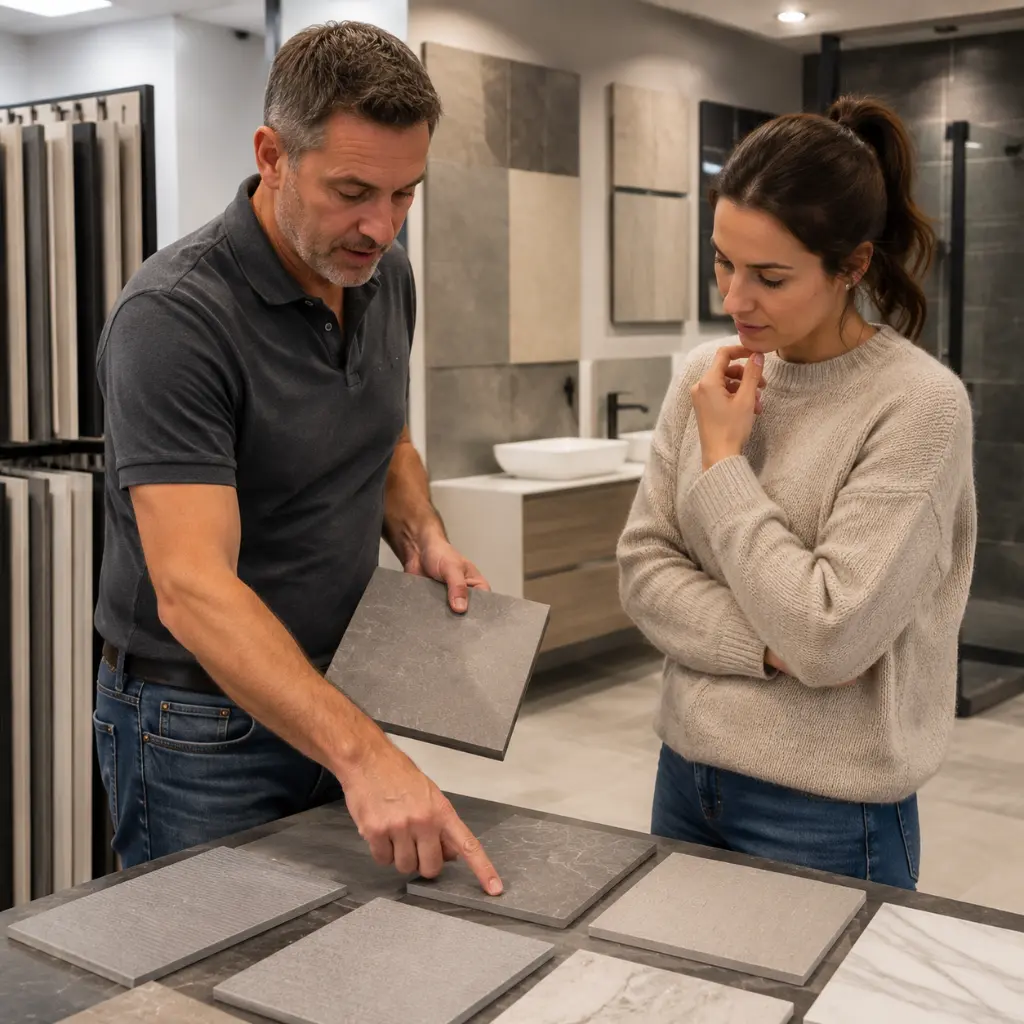
Ratings describe a laboratory test, not your bathroom. Ask for a full size sample rather than a small cut piece, since you need enough surface to stand on.
Wet it, add a small amount of shower gel, and put a bare foot on it at a slight angle. That two minute check tells you more about how the floor will feel on a wet morning than any figure on a datasheet.
Do the same with the tile you are considering for the area just outside the shower. The two often come from different ranges, and the difference between them is what you will actually notice.
Making existing tiles less slippery
Replacing a floor is not always practical, and there are a few things worth trying first.
Start with a proper deep clean, because a surprising number of slippery floors are simply coated in residue. In the Harrow bathrooms TG Handyman London gets called to, stripping that film back often restores most of the grip the tile had when it went down.
Chemical anti-slip treatments work by micro-etching the tile surface to create tiny channels that break the water film. They suit ceramic, porcelain and some stone, they leave the appearance slightly duller, and they need testing on a spare tile or an out of sight corner first.
Applied anti-slip coatings are the alternative, though they wear in traffic and eventually need redoing. Treat both as maintenance rather than a permanent change.
A well-made mat with a suction or rubber backing still has its place, particularly inside a bath. Loose bath mats on a hard floor are worth avoiding, since a mat that slides is worse than no mat at all.
How you clean it decides how safe it stays
Use a pH neutral cleaner and rinse the floor properly afterwards. Soap based products and anything promising extra shine leave a film that reduces traction with every application.
For textured tiles, a stiff brush reaches into the surface where a flat mop just glides across the high points. Work across the grain of the texture rather than along it.
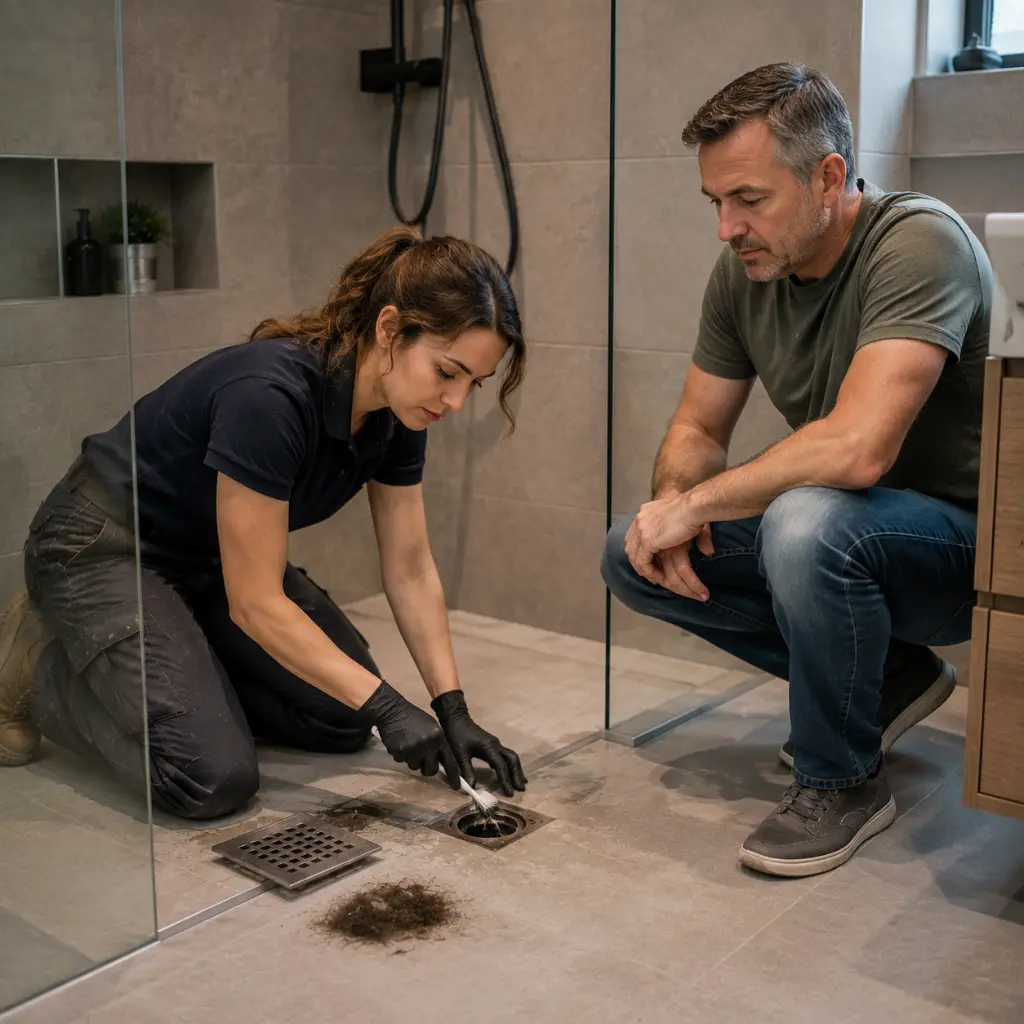
In hard water areas, limescale on a shower floor builds a slick layer that no rating will overcome. Squeegeeing the floor after use and clearing the extractor for long enough to dry the room both help more than people expect.
Choosing with confidence
Good non slip bathroom tiles are chosen for the specific zone they will sit in, not bought at the highest rating on offer. Match the barefoot class to the wet area, keep the format small where water drains, and be realistic about how often the floor will be cleaned.
The floor underneath still has the final say. A level, well-drained substrate with a properly laid finish makes more difference to safety than the last point on any rating scale.
Talk it over before you order
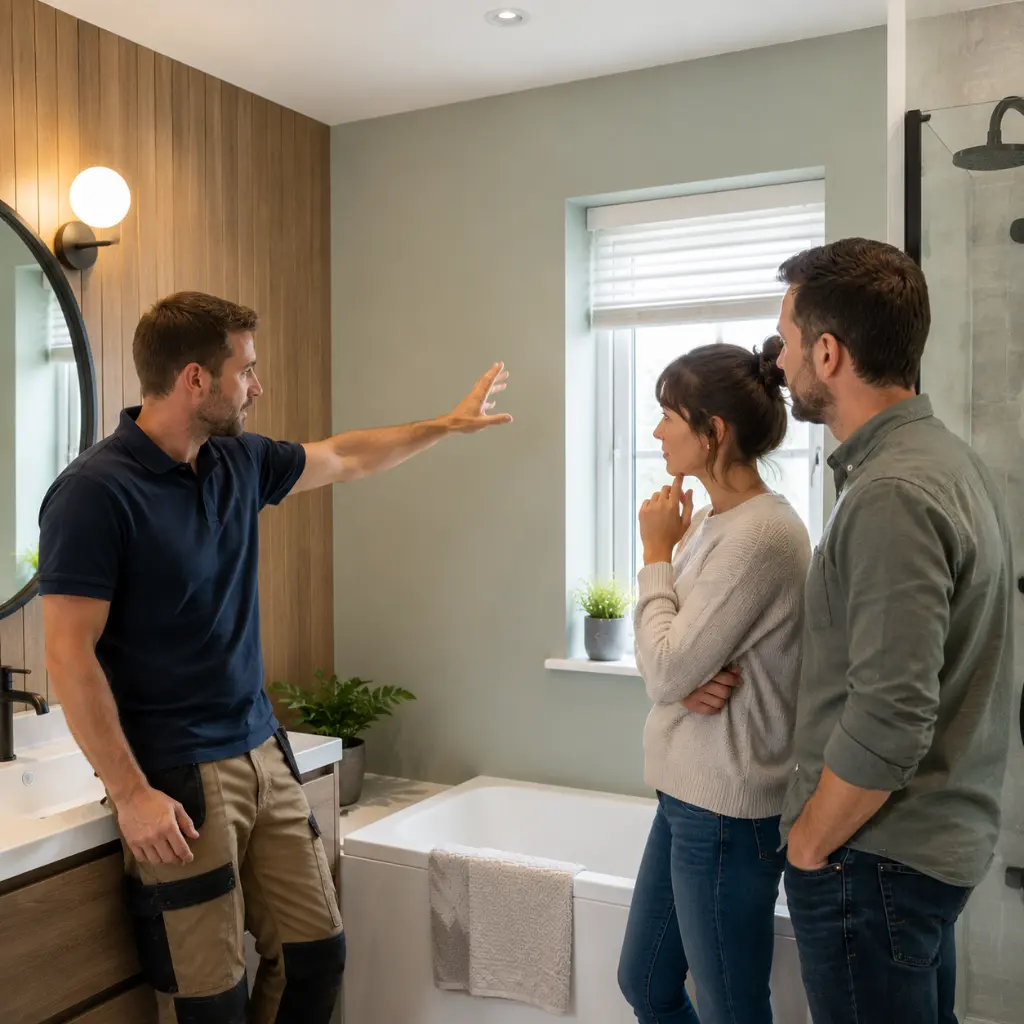
If you are choosing tiles for a bathroom or want an existing floor assessed, it is worth a look at the room before anything is bought. TG Handyman London covers Harrow, Wealdstone, Pinner, Stanmore, Kenton and Edgware, fully insured and with no call-out fee. Request a free, no-obligation quote and we will give you a straight view on what suits your floor.